Platform

Engage

Learn

Perform

Kiosk

Pricing

Services

Consulting

Implementation

Partners

HR Consultants

Technology Vendors

Resources

Sectors

Blog

News

FAQs

About

Our Company

Careers

Contact

Modern Slavery Surveys

Identify Risk. Strengthen Due Diligence. Improve Supply Chain Transparency

Modern slavery remains one of the most significant risks facing global supply chains. Organisations are increasingly expected to demonstrate that they understand the labour practices, working conditions and human rights risks that may exist throughout their supplier networks.

amptivo Modern Slavery Surveys provide a practical way to gather information, assess risk, support supplier due diligence programmes and strengthen supply chain transparency. Through structured questionnaires, assessments and workforce engagement surveys, organisations can collect consistent evidence, identify areas of concern and support ongoing compliance activities.

Whether you are conducting supplier questionnaires, modern slavery risk assessments, labour standards reviews or wider responsible sourcing programmes, amptivo helps you gather meaningful insights at scale and take informed action.
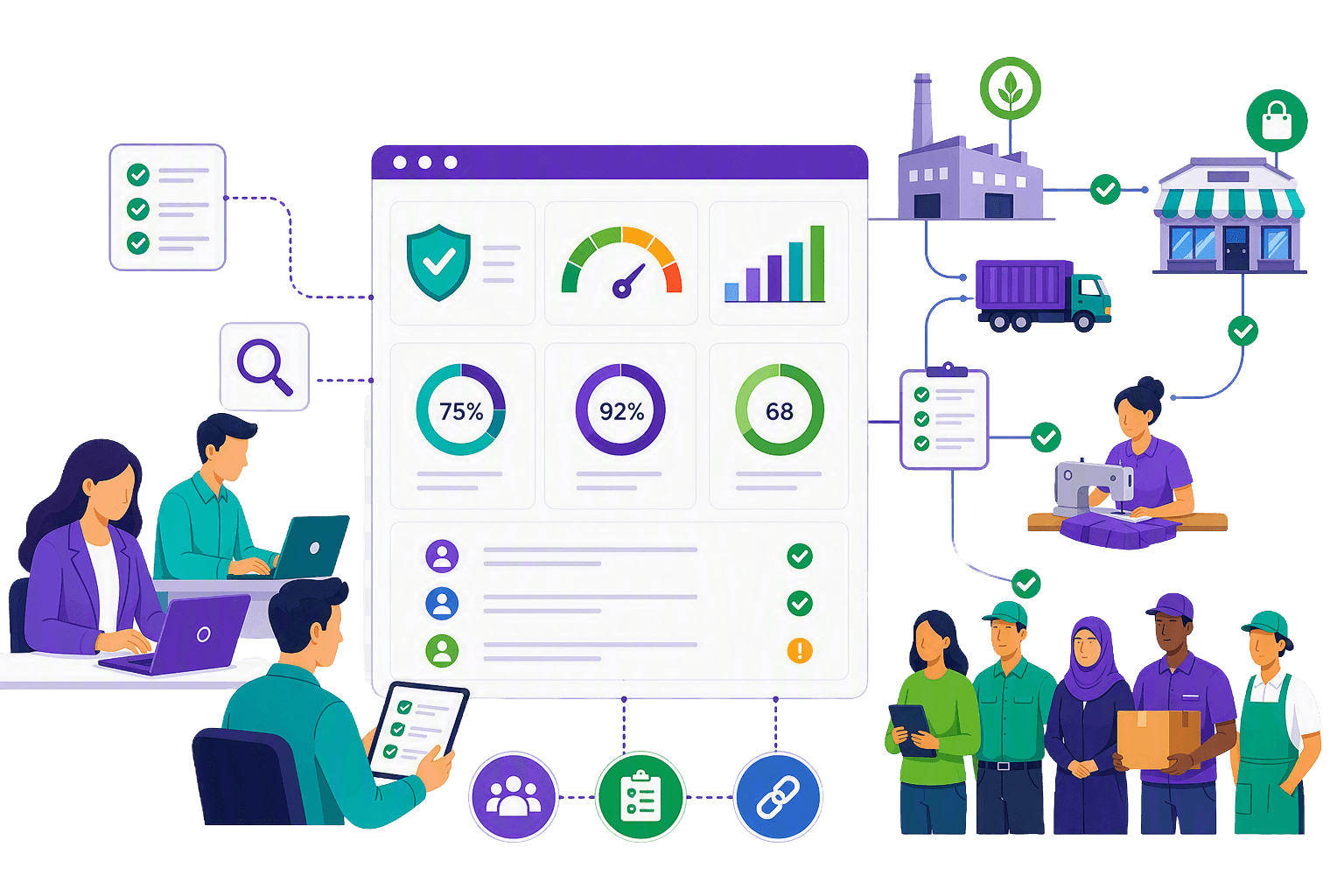
Modern Slavery Surveys

Why Modern Slavery Due Diligence Matters

Modern slavery can occur in virtually any sector, geography or supply chain. It may involve forced labour, debt bondage, human trafficking, exploitation of vulnerable workers or unethical recruitment practices.

The Modern Slavery Act 2015 increased expectations on organisations to actively identify, assess and manage modern slavery risks within their operations and supply chains. Whilst policies, audits and certifications remain important, surveys provide an additional layer of visibility by capturing information directly from suppliers and workers.

Without structured due diligence, organisations may struggle to:

  • Identify hidden labour risks within complex supply chains
  • Monitor supplier compliance and ethical standards
  • Demonstrate ongoing due diligence activities
  • Evidence responsible sourcing programmes
  • Support annual modern slavery reporting requirements
  • Understand workforce experiences beyond formal audits
  • Detect emerging issues before they escalate

Modern Slavery Surveys create a scalable mechanism for gathering information, assessing risk and supporting continuous improvement activities across supplier networks.

Supply Chain Due Diligence

Effective due diligence requires organisations to move beyond occasional audits and actively engage with suppliers on an ongoing basis. 

  • Supplier Policies & Governance

Assess whether suppliers have appropriate policies, procedures and accountability structures in place to prevent modern slavery and labour exploitation.

  • Labour Standards & Working Conditions

Collect information relating to recruitment practices, worker welfare, working hours, accommodation, payment practices and employment conditions.

  • Risk Assessment Programmes

Identify suppliers operating in higher-risk geographies, industries or labour models and prioritise further review where needed.

  • Workforce Voice

Gather confidential feedback from workers within supplier organisations to provide additional insight beyond management responses and compliance documentation.

  • Ongoing Monitoring

Conduct regular surveys to track progress, identify trends and support continuous improvement programmes across the supply chain.

Questionnaires and Assessments

Every organisation’s risk profile is different, which is why amptivo supports fully configurable questionnaires and assessment programmes:

  • Modern Slavery Self-Assessment Questionnaires

Structured assessments designed to capture information relating to supplier policies, governance frameworks, labour standards, worker protections and due diligence activities.

  • Supplier Due Diligence Questionnaires

Pre-qualification and ongoing assessment surveys designed to support supplier onboarding, ongoing monitoring and procurement processes.

  • Human Rights Risk Assessments

Questionnaires that help organisations identify potential human rights risks and areas requiring additional investigation or remediation.

  • Labour Provider Assessments

Focused surveys for labour agencies, recruitment partners and temporary workforce providers operating within higher-risk labour environments.

  • Worker Engagement Surveys

Anonymous feedback channels that allow workers to raise concerns, highlight risks and provide insight into working conditions.

Gain Greater Visibility Across Your Supply Chain

Policies and audits alone rarely provide a complete picture.

By combining supplier questionnaires with workforce engagement, organisations can develop a deeper understanding of the conditions, practices and risks that may exist throughout their supply chain.

amptivo helps organisations:

  • Collect evidence consistently across suppliers
  • Standardise due diligence programmes
  • Identify higher-risk suppliers and locations
  • Prioritise remediation and corrective action
  • Maintain audit-ready records
  • Demonstrate ongoing engagement activities
  • Support ESG, sustainability and responsible sourcing initiatives

The result is a more proactive approach to supply chain transparency and modern slavery risk management.

Support Compliance With The Modern Slavery Act 2015

The Modern Slavery Act 2015 increased the importance of transparency and accountability throughout supply chains.

Whilst surveys alone do not ensure compliance, they can form an important component of a wider due diligence programme by helping organisations:

  • Gather relevant supplier information
  • Assess and monitor modern slavery risks
  • Demonstrate ongoing engagement activities
  • Support annual reporting and governance processes
  • Evidence continuous improvement initiatives
  • Strengthen responsible sourcing programmes

By creating structured feedback mechanisms, organisations can supplement audits, site visits, certifications and policy reviews with direct supplier and workforce insight.

Build A More Ethical, Transparent Supply Chain

Speak to us about building a modern slavery survey programme that supports your due diligence objectives and strengthens supply chain transparency

FAQs

What are modern slavery surveys?

Modern slavery surveys are structured questionnaires used to gather information relating to labour standards, worker welfare, recruitment practices, ethical sourcing and human rights risks. They help organisations identify potential risks and strengthen supply chain due diligence activities.

How do modern slavery questionnaires support supplier due diligence?

Supplier questionnaires provide a consistent way of collecting information from suppliers regarding policies, governance, labour standards and risk management practices. This information can help organisations assess risk, prioritise follow-up actions and demonstrate ongoing due diligence efforts.

Can modern slavery surveys help with compliance under the Modern Slavery Act 2015?

Modern slavery surveys can form part of a wider compliance and due diligence programme. They help organisations gather evidence, assess risk and maintain visibility across their supply chain, supporting broader governance and reporting activities.

What questions should be included in a modern slavery assessment?

Assessments typically cover areas such as recruitment practices, worker rights, employment conditions, grievance mechanisms, labour provider management, policy frameworks, training, risk assessments and supplier governance arrangements.

Can workers complete modern slavery surveys anonymously?

Yes. Surveys can be configured to allow anonymous responses, helping workers provide honest feedback and raise concerns without fear of retaliation. This can be particularly valuable when gathering workforce insight across supplier organisations.

How often should modern slavery risk assessments be conducted?

Many organisations conduct annual supplier assessments supported by periodic reviews throughout the year. Higher-risk suppliers or labour providers may be assessed more frequently as part of an ongoing monitoring programme.

How do modern slavery surveys differ from supplier audits?

Audits provide an important compliance mechanism, but surveys create ongoing engagement and feedback opportunities. Surveys can gather information more frequently, reach larger populations and provide workforce insight that may not always be visible through audits alone.