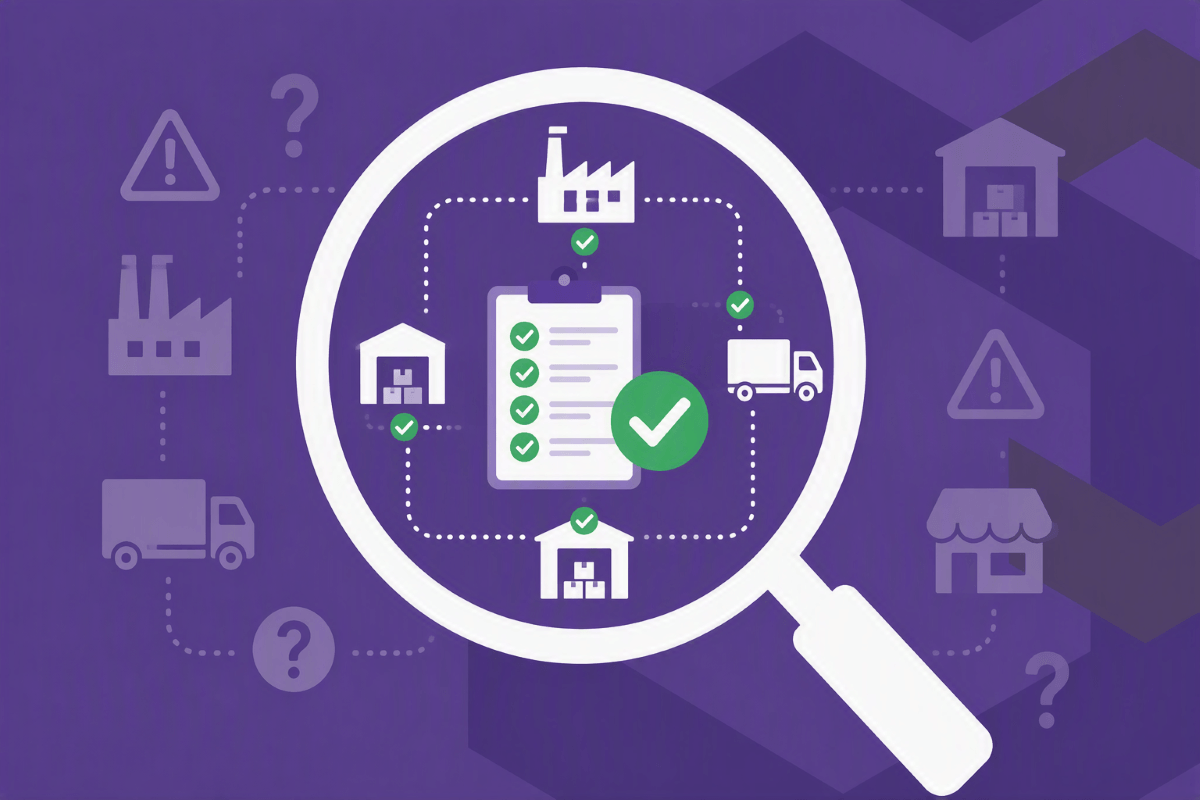
Visibility and traceability and openness: why supply chain transparency matters.
For many years, supplier management has centred around contracts, pricing, service levels and periodic audits. Whilst those activities remain important, they no longer provide enough visibility on their own. As pressure grows from customers, regulators, investors and certification bodies, supply chain transparency has become a much broader business expectation. Organisations are increasingly expected to understand not only whether suppliers are meeting contractual obligations, but also where risks may be developing, how suppliers are coping with operational pressures, and whether meaningful engagement is taking place beyond formal audit cycles.
Customers, regulators, investors and certification bodies expecting businesses to demonstrate genuine visibility throughout their supply chains want evidence that organisations understand supplier performance, identify emerging risks, and actively engage with suppliers rather than relying solely on annual compliance checks.
The reality is that many supply chains remain surprisingly opaque.
A supplier may consistently meet delivery targets whilst simultaneously struggling with workforce turnover, labour shortages, training challenges, ethical concerns, sustainability pressures or operational inefficiencies. By the time those issues become visible through traditional reporting routes, the consequences can already be impacting performance.
Organisations that actively engage suppliers through structured feedback programmes gain an opportunity to identify concerns earlier, strengthen relationships and build greater resilience across their supply chain.
Supply Chain Transparency Is Under Increasing Scrutiny
The importance of supply chain oversight continues to grow.
The UK Government’s guidance on modern slavery and transparency in supply chains highlights that businesses must be proactive in identifying risks and should conduct meaningful engagement with workers, suppliers and stakeholders to prevent and mitigate harm. The guidance notes that businesses should avoid assuming that risks do not exist simply because they have not been identified.
The same guidance references International Labour Organization (ILO) estimates indicating that 27.6 million people globally are living in situations of forced labour on any given day, demonstrating why supply-chain due diligence remains a significant corporate responsibility.
Similarly, the CIPD has publicly stated that supply chain transparency is a crucial element in tackling modern slavery and human trafficking and that organisations should take a zero-tolerance approach to exploitation within their supply chains.
For businesses operating in sectors such as food manufacturing, food retail, agriculture, labour provision and logistics, these expectations continue to expand.
Audits Alone Only Tell Part of the Story
Traditional supplier audits remain valuable, but they provide only a snapshot in time.
A site assessment completed once or twice per year may confirm whether policies, training records and procedures are present. What it often doesn’t reveal is how suppliers are experiencing day-to-day challenges throughout the year.
Supplier surveys can complement existing audit programmes by creating a structured mechanism for ongoing communication.
For example, surveys can help organisations understand:
- Emerging operational challenges
- Labour availability pressures
- Training and skills shortages
- Supplier satisfaction levels
- ESG programme maturity
- Sustainability challenges
- Ethical trade concerns
- Areas requiring additional support or collaboration
Rather than replacing audits, supplier surveys provide context and insight that help organisations focus resources where they are most needed.
Risk Often Appears Before It Becomes Visible
Supply-chain resilience remains a significant concern for procurement professionals.
Recent findings from the Chartered Institute of Procurement & Supply (CIPS) highlight ongoing concern amongst procurement and supply leaders around disruption, geopolitical uncertainty and supply-chain risk. CIPS research also emphasises the increasing importance of resilience, transparency and proactive supplier management.
Many supplier issues do not emerge overnight.
Rising absenteeism, staff turnover, declining engagement, increased recruitment challenges, cost pressures or operational bottlenecks often develop gradually before becoming visible through traditional performance metrics.
Structured supplier feedback provides an opportunity to identify these emerging indicators earlier and engage constructively before issues escalate.
Stronger Supplier Relationships Deliver Mutual Value
Supplier engagement is often discussed in terms of risk management, but the benefits extend much further.
High-performing supply chains are built on collaboration.
When suppliers are given opportunities to provide feedback, organisations can gain insight into:
- Communication effectiveness
- Process improvements
- Customer experience
- Joint efficiency opportunities
- Innovation ideas
- Partnership challenges
The result is often stronger commercial relationships and a greater willingness to work together to solve problems.
Supplier surveys create a structured channel through which suppliers can raise concerns, highlight successes and contribute ideas that may otherwise go unheard.
Supplier Surveys Support Governance and Due Diligence
For organisations managing responsible sourcing programmes, supplier feedback can also provide valuable evidence.
Many businesses are now required to demonstrate ongoing supplier oversight across areas such as:
- Modern slavery prevention
- Human rights due diligence
- Ethical sourcing
- Sustainability
- ESG reporting
- Labour standards
- Responsible recruitment
Documented supplier engagement activities help demonstrate that supply-chain oversight is continuous rather than reactive.
This creates an auditable record showing that organisations are actively listening, identifying concerns and taking reasonable steps to understand risks within their supply chain.
Listening Is Becoming a Competitive Advantage
The most resilient organisations are increasingly those that develop visibility beyond their own four walls.
Financial performance, productivity, customer satisfaction and operational resilience are all influenced by supplier capability and supplier health.
Whilst organisations have spent decades measuring customer satisfaction and employee engagement, many still invest relatively little effort in systematically understanding their suppliers.
That gap represents an opportunity.
Businesses that actively gather supplier feedback can identify risks earlier, strengthen relationships, improve compliance outcomes and build more resilient supply chains.
In an environment where transparency, accountability and resilience are increasingly expected, supplier engagement is no longer simply a procurement activity. It is becoming a strategic business capability.
Contact us to discuss how we may be able to help you.
Disclaimer
This article is intended to share helpful insights and general information. It isn’t advice and shouldn’t be relied upon as such. Every organisation is different, so we’d always recommend seeking appropriate professional guidance before making decisions or taking action based on anything you’ve read here. While we take care to ensure our content is accurate and up to date, amptivo accepts no responsibility for any loss or impact arising from reliance on this article, to the fullest extent permitted by law.
Copyright Notice
© 2026 amptivo Ltd. All rights reserved. This content may not be reproduced, distributed, or used without prior written permission.