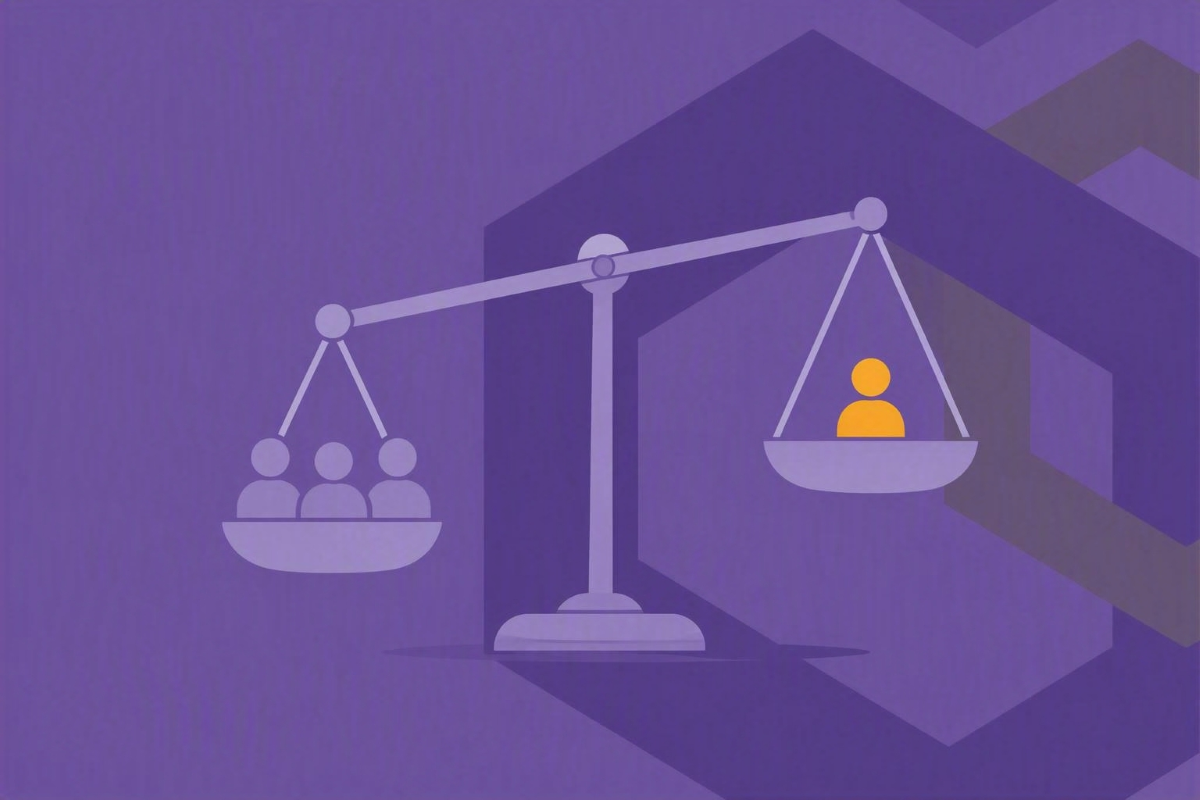
Why good intentions are not always enough: the hidden challenge of indirect discrimination at work.
Most employers would like to believe that discrimination is something obvious. We tend to associate it with deliberate actions, explicit bias, or unfair treatment that can be easily identified and challenged. The reality, however, is often more complex when we consider what may go wrong when looking more closely at Indirect Discrimination..
Many of the barriers that employees experience today arise not from conscious decisions to exclude people, but from workplace policies and practices that appear neutral on the surface yet create unintended disadvantages for certain groups. This is known as indirect discrimination, and it remains one of the most misunderstood aspects of workplace equality.
In a world where organisations are placing greater emphasis on diversity, equality and inclusion (DEI), understanding indirect discrimination is no longer simply a compliance exercise. It is becoming a critical component of effective people management.
Equality Does Not Always Mean Equity
One of the greatest misconceptions in employment practice is the belief that treating everyone exactly the same guarantees fairness. While consistency remains important, applying identical rules to employees with different circumstances can sometimes produce unequal outcomes.
The Equality Act 2010 defines indirect discrimination as a provision, criterion or practice that applies to everyone but puts people who share a protected characteristic at a particular disadvantage compared to others unless it can be objectively justified.
This distinction is significant because workplace policies are often designed with efficiency, consistency and operational effectiveness in mind. Yet research consistently demonstrates that employee experiences differ widely depending on factors such as age, disability, gender, religion and caring responsibilities.
As management scholar Edgar Schein observed in 2017, organisational culture is shaped not only by what leaders say but by the systems and assumptions embedded within everyday practices. In other words, even well-intentioned policies can reinforce inequality if their impact is not carefully evaluated.
The Business Case for Looking Beyond Compliance
For many years, conversations about discrimination focused primarily on legal risk. While legal compliance remains essential, modern organisations increasingly recognise that inclusion has a direct impact on organisational performance.
Research conducted by Deloitte in 2023 found that employees who feel included are more likely to report higher levels of engagement, innovation and workplace wellbeing. Similarly, McKinsey’s Diversity Matters Even More report from 2023 identified a continuing relationship between diverse leadership teams and stronger organisational performance.
Although correlation does not automatically imply causation, the wider body of evidence suggests a clear trend. Organisations that create environments where people can contribute fully tend to benefit from broader perspectives, improved decision-making and stronger employee retention.
In 2014, the CIPD also argues that inclusive workplaces are better positioned to attract talent in increasingly competitive labour markets. This matters because demographic shifts, skills shortages and evolving employee expectations are reshaping the nature of work across many sectors.
In short, addressing indirect discrimination is not merely about avoiding tribunal claims; it is about creating conditions in which people can perform at their best.
When Neutral Policies Create Unequal Outcomes
Indirect discrimination often emerges from policies that seem entirely reasonable at first glance.
For example, requiring all employees to work fixed hours in the office may improve operational consistency. However, the policy could disproportionately affect parents with childcare responsibilities, individuals with disabilities who require flexibility, or employees observing religious commitments.
Similarly, recruitment processes that rely heavily on timed aptitude testing may inadvertently disadvantage neurodivergent candidates if reasonable adjustments are not considered.
These examples illustrate an important principle: the intention behind a policy is often less important than its impact.
As Verna Myers, a recognised inclusion expert, famously stated: “Diversity is being invited to the party. Inclusion is being asked to dance.”
This quote has become widely cited because it captures a crucial truth. Representation alone does not guarantee equal opportunity. Organisations must also consider whether workplace processes enable people from diverse backgrounds to participate fully.
Asking Better Questions
Perhaps the most effective way to reduce the risk of indirect discrimination is to adopt a habit of critical reflection before implementing workplace policies.
HR professionals and business leaders may benefit from asking:
-
- Who could be disadvantaged by this policy?
- Have we assessed the potential impact on protected groups?
- What legitimate business objective are we trying to achieve?
- Are there less restrictive alternatives available?
- Have affected employees been consulted?
These questions align closely with recommendations from both the Equality and Human Rights Commission (EHRC) and contemporary HR best practice guidance.
Importantly, they encourage organisations to move beyond reactive compliance and towards proactive inclusion.
Building Fairer Workplaces
The workplace of 2026 looks very different from that of a decade ago. Hybrid working arrangements, greater awareness of neurodiversity, multigenerational workforces and changing social expectations have all challenged traditional assumptions about how work should be organised.
As these changes continue, organisations may need to reconsider policies that were once accepted without question.
This does not mean every policy that disadvantages a group is unlawful. Employers can justify certain requirements where they represent a proportionate means of achieving a legitimate business aim. The key issue is whether those requirements have been carefully considered, evidenced and balanced against their impact on employees.
Fairness, therefore, is not simply about consistency. It is about recognising difference and ensuring workplace systems do not create avoidable barriers.
In Summary
Indirect discrimination serves as a reminder that inclusion is rarely achieved through good intentions alone. It requires organisations to examine assumptions, challenge established practices and remain curious about how decisions affect different people.
In an increasingly diverse labour market, successful organisations will be those that ask not only “Is this policy fair?” but also “Fair for whom?”
That subtle shift in perspective can make the difference between a workplace that merely treats people equally and one that genuinely enables everyone to succeed.
Contact us to discuss how we may be able to help you to remain compliant.
Disclaimer
This article is intended to share helpful insights and general information. It isn’t advice and shouldn’t be relied upon as such. Every organisation is different, so we’d always recommend seeking appropriate professional guidance before making decisions or taking action based on anything you’ve read here. While we take care to ensure our content is accurate and up to date, amptivo accepts no responsibility for any loss or impact arising from reliance on this article, to the fullest extent permitted by law.
Copyright Notice
© 2026 amptivo Ltd. All rights reserved. This content may not be reproduced, distributed, or used without prior written permission.